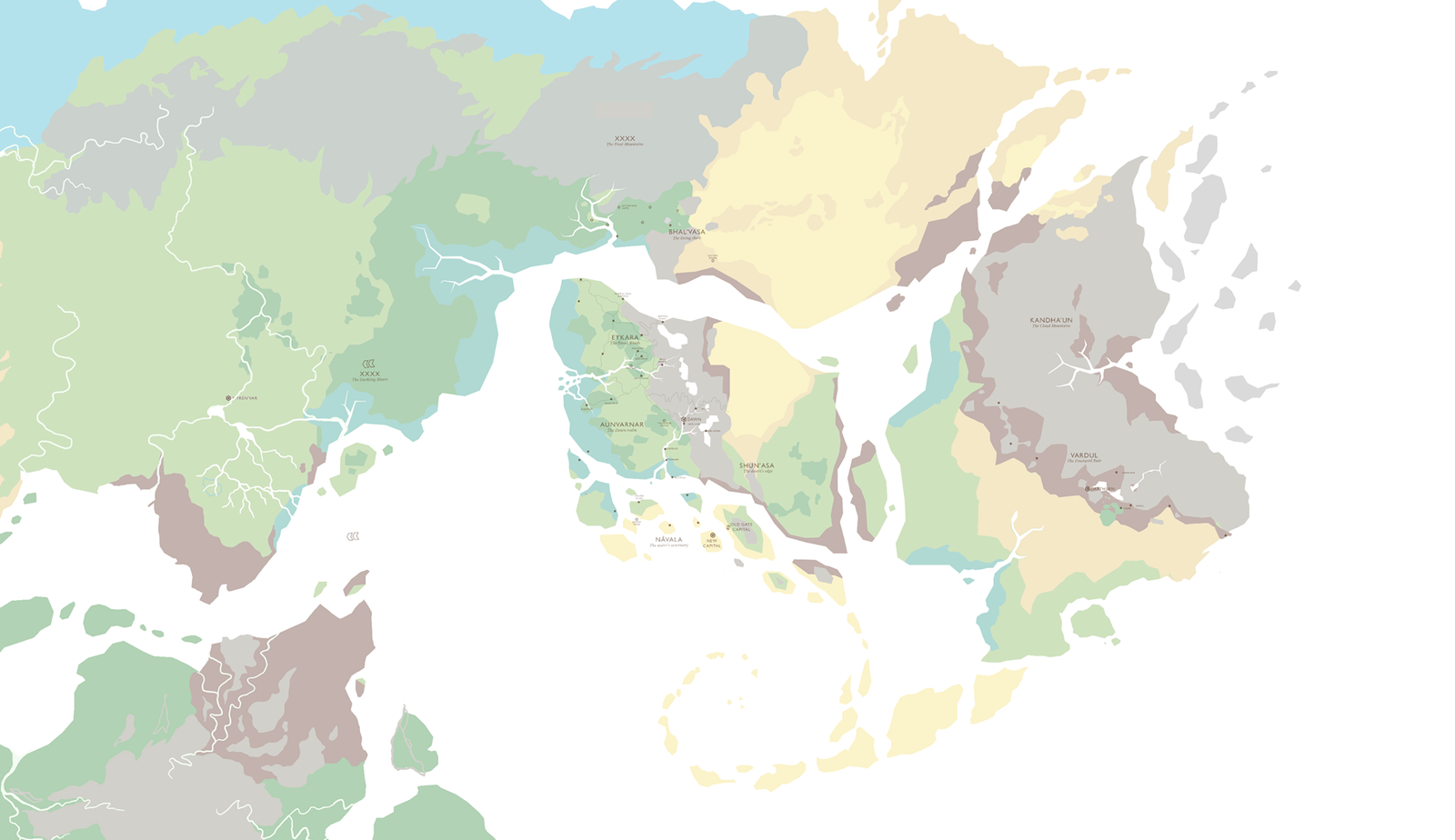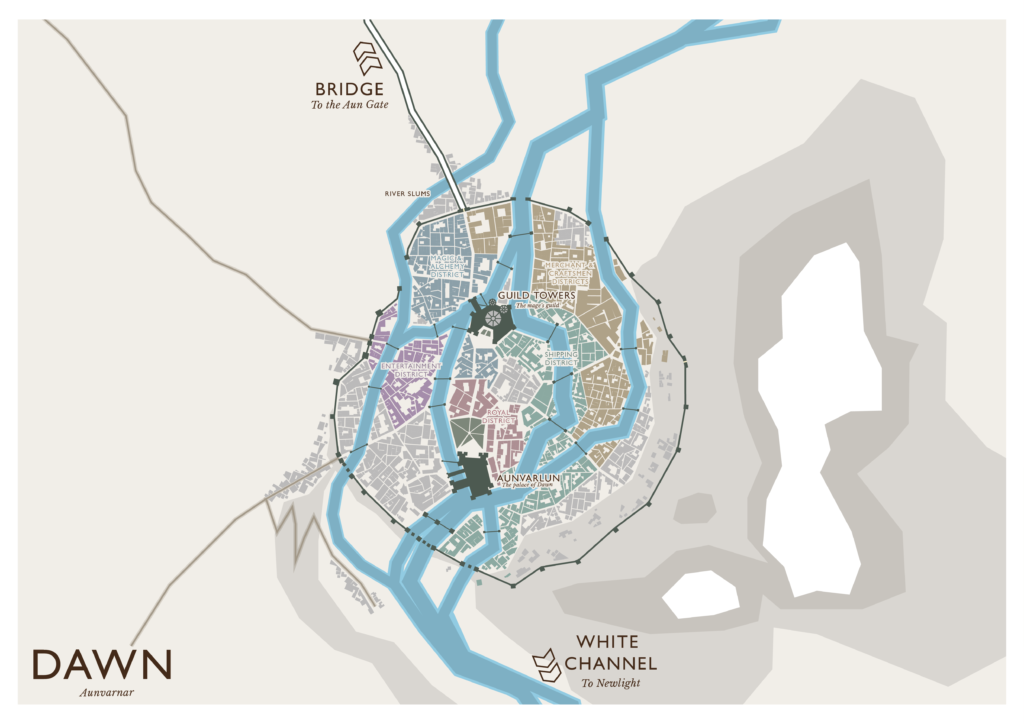

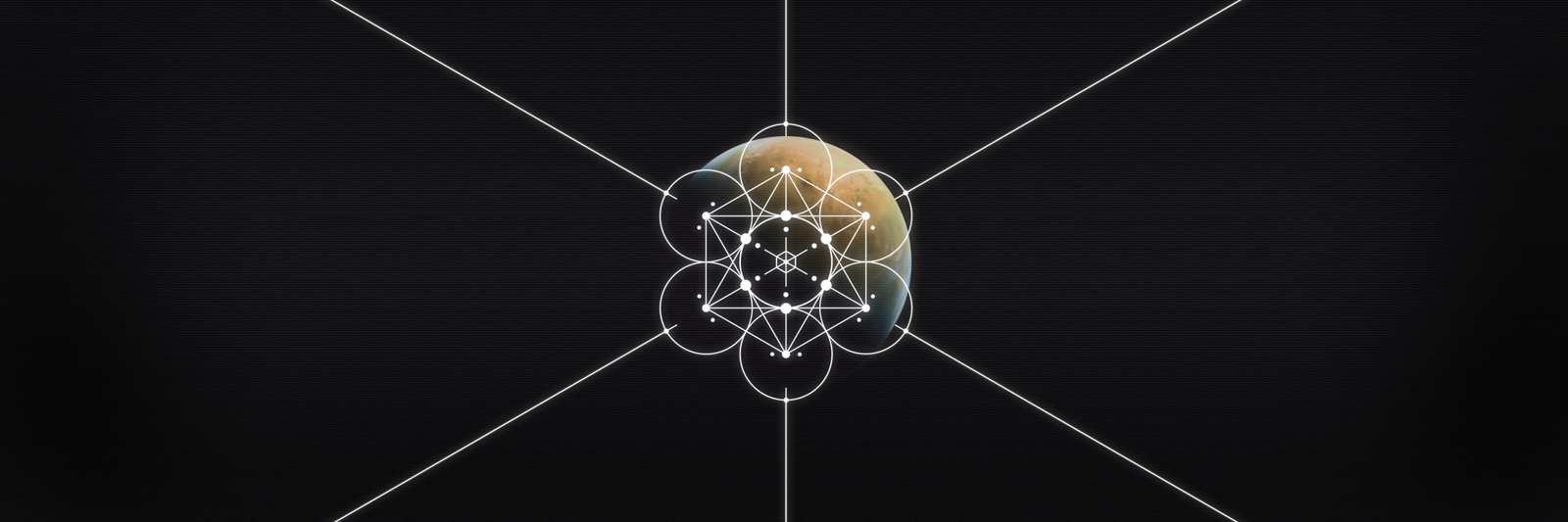
In SIGIL, you play as Wavefront Explorers from Tharsis, the newly born and last remaining society of humanity. Equipped with the best technology Wavefront provides and infused with the enigmatic capabilities of sophian matter, you alone can venture out into the beauty and dangers of the planet Nerene, the newly renamed Sapphire Mars.
Discover half-terraformed geography, delve deep into the ruined mega-city arcoviums of Humanity One, and face the myriad dangers the unknown will throw at you. Do everything you can to uncover the dark secrets of humanity’s past and the grand mysteries of your own cosmic future.
Time is short, and Tharsis must survive.
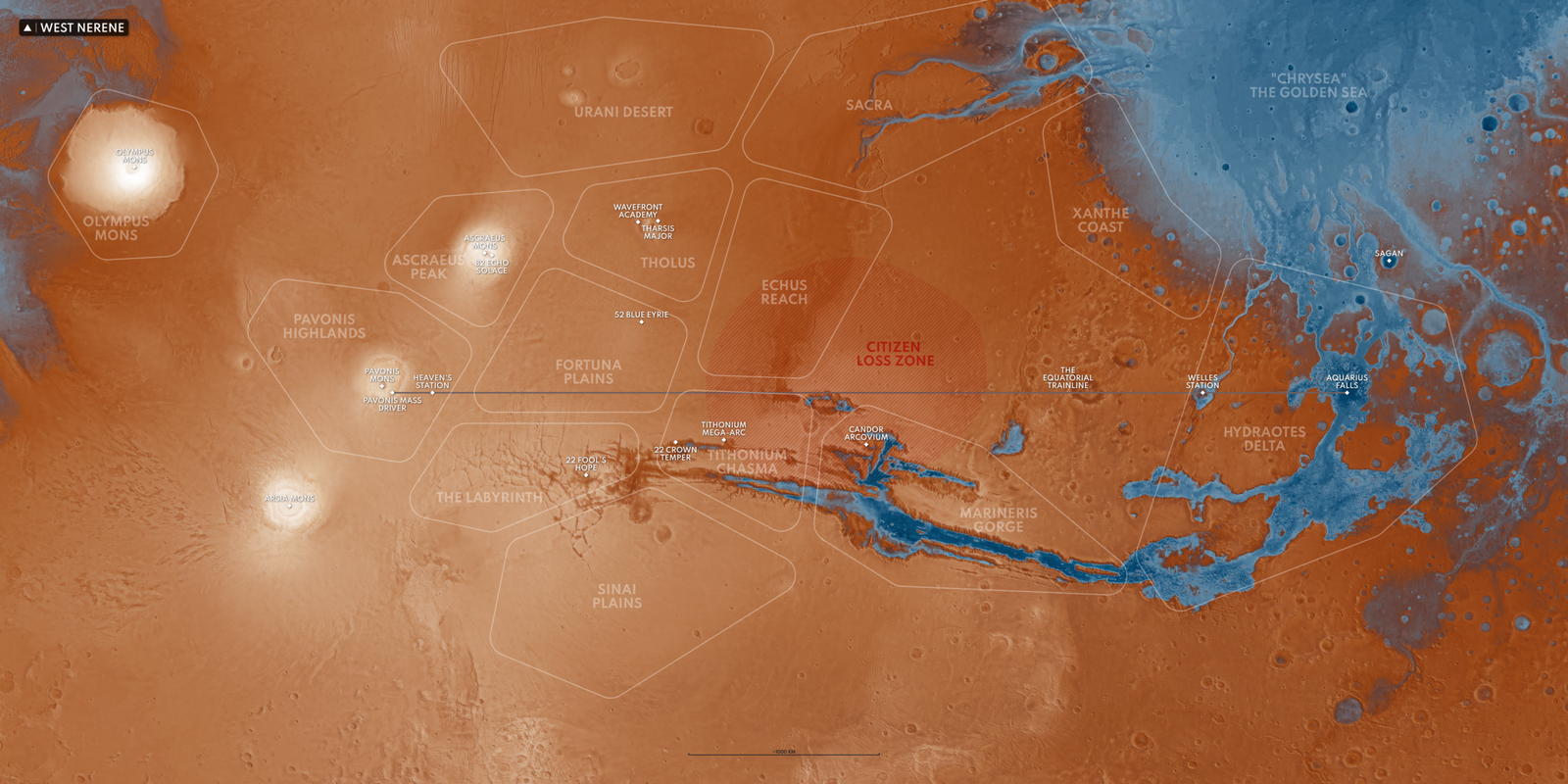
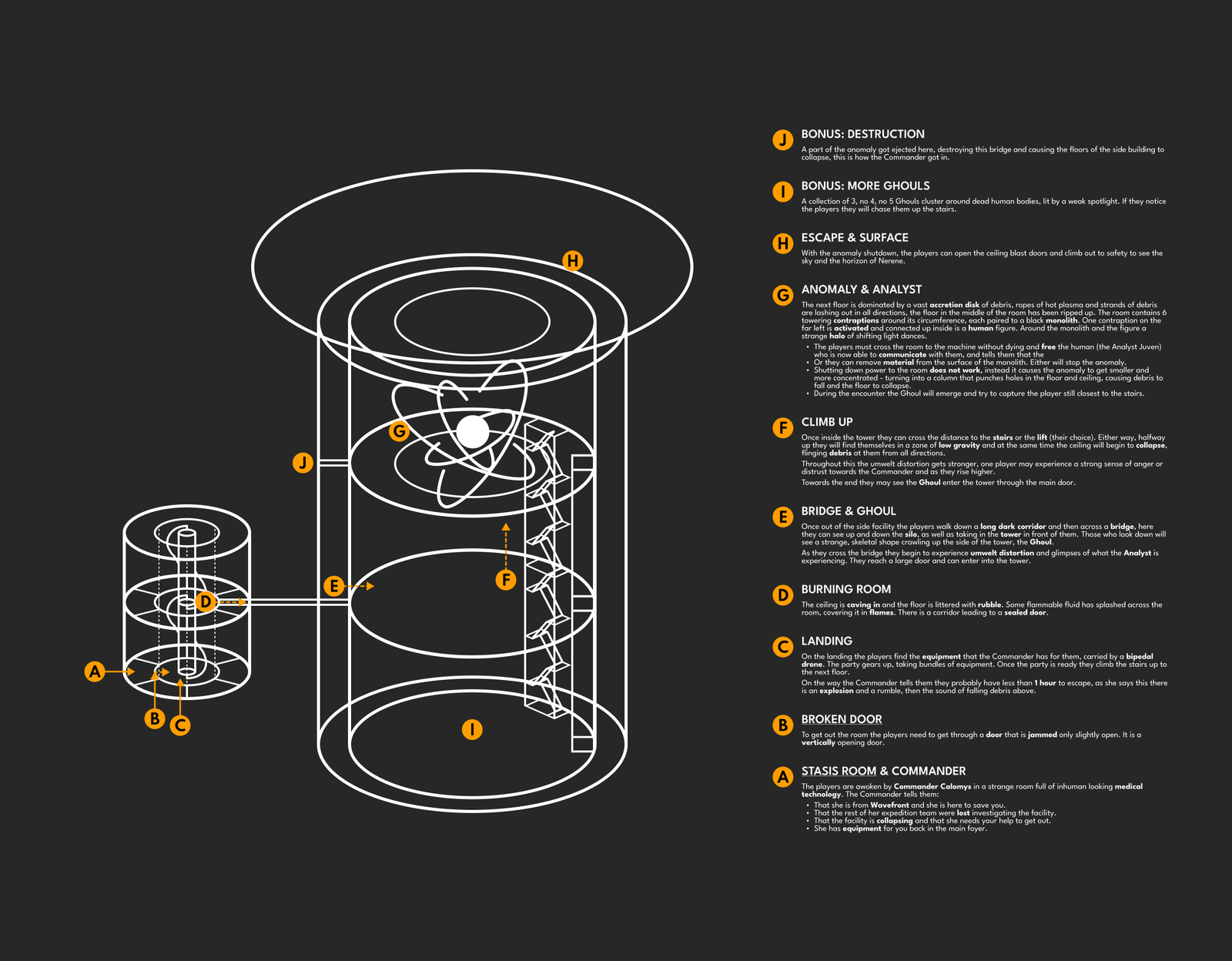
A Hard Sci-Fi, Low-Combat TTRPG
SIGIL is a hard sci-fi game partly inspired by TV shows such as The Expanse and For All Mankind, and books such as Project Hail Mary. As much as possible within the world is grounded in real science. This is a genre that can be challenging to work on: careful rules have to be established during world-building, and players who are less familiar with the genre need gentle onboarding. However, the payoff is that stories set in this genre have the potential to be very grounded and believable.
Hard sci-fi stories, especially those set in space, open the door to tension that can arise from physical or technological hazards. SIGIL leans into this by de-emphasising combat and instead focusing on ‘Crisis’ as its core conflict game loop. A Crisis is any time-pressure situation where someone’s safety or the players’ goals are under threat. Through this design, SIGIL tells players it is more concerned with saving conscious beings than killing them.
Visual Design
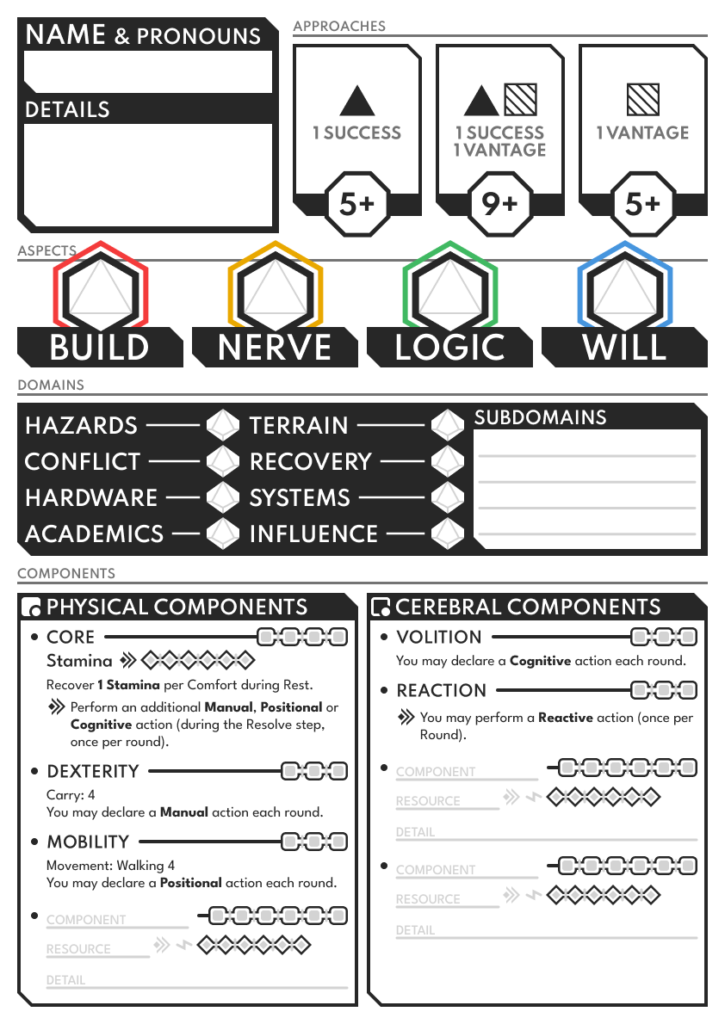
A major factor when designing for a TTRPG is how you present gameplay information. Printed sheets in a TTRPG are the equivalent of video game UI elements. However, they do not have the advantage of being digitally malleable; the player must update the state of the game on paper.
This means that conveying affordance (function through form) is even more important. The player doesn’t just need to know what a ‘UI element’ is for; they also need to know how to manipulate it. Often, as designers, we have to convey this with very little tactility.
SIGIL is a work in progress, and with each iteration of the game’s character sheets, I aim to make the onboarding and usability clearer:
- Stats that use specific dice convey this through the shape of their elements on the sheet.
- Tracks provide places to mark current and maximum values while still using pips that are readable at a glance.
- Crucial rules of the game are captured in a lightweight form, right where the player needs them.
Mechanics
When working on a game with a lot of complexity in its narrative, world, and overall context, it can add real risk if the mechanics are equally heavyweight. When designers sit down to build ‘hard’ settings, it is possible to get wrapped up in the complexity and detail and transfer that over into lots of nuanced gameplay systems.
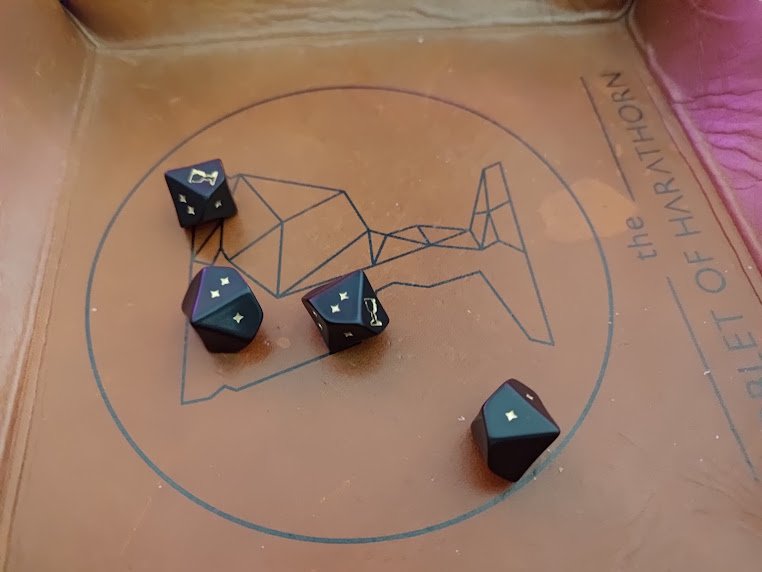
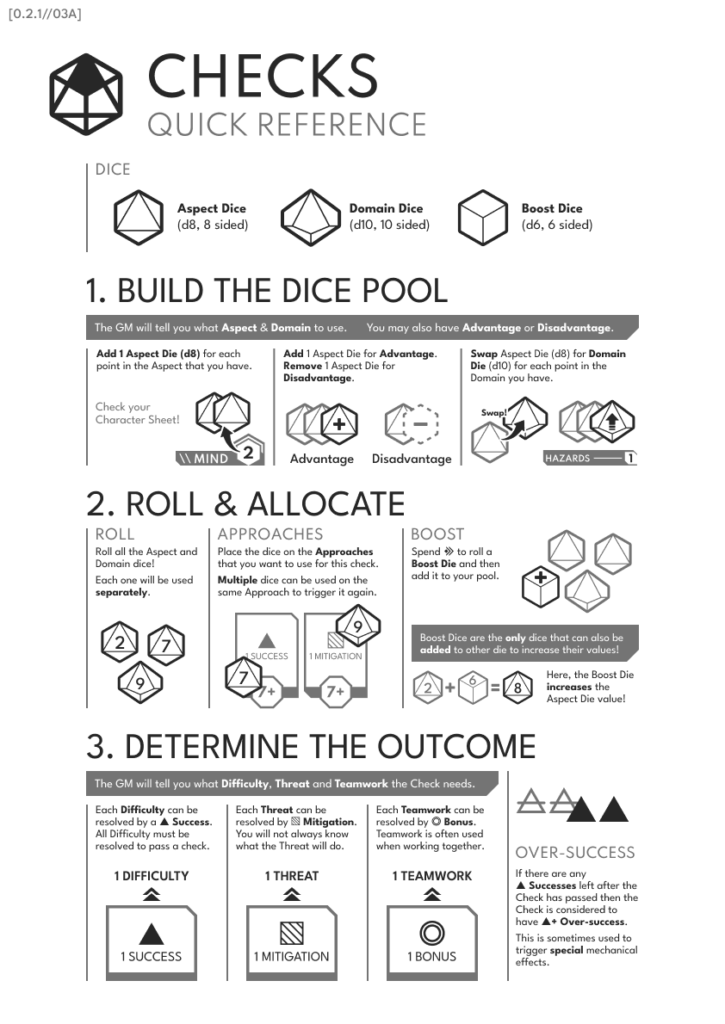
With SIGIL, I wanted to avoid this and keep the game accessible; hard sci-fi does not have to equal simulationist. The core of the game centres around an action resolution system that is fast, while producing frequent, interesting mechanical decisions and tying directly into the problems and threats that the player’s Wavefront Explorer characters are facing.
This action system is complemented by modular, narrative-driven, lightweight mission and item systems that offer just enough structure to align the table, without burdening them with endlessly checking the index of the source book.