
Rook
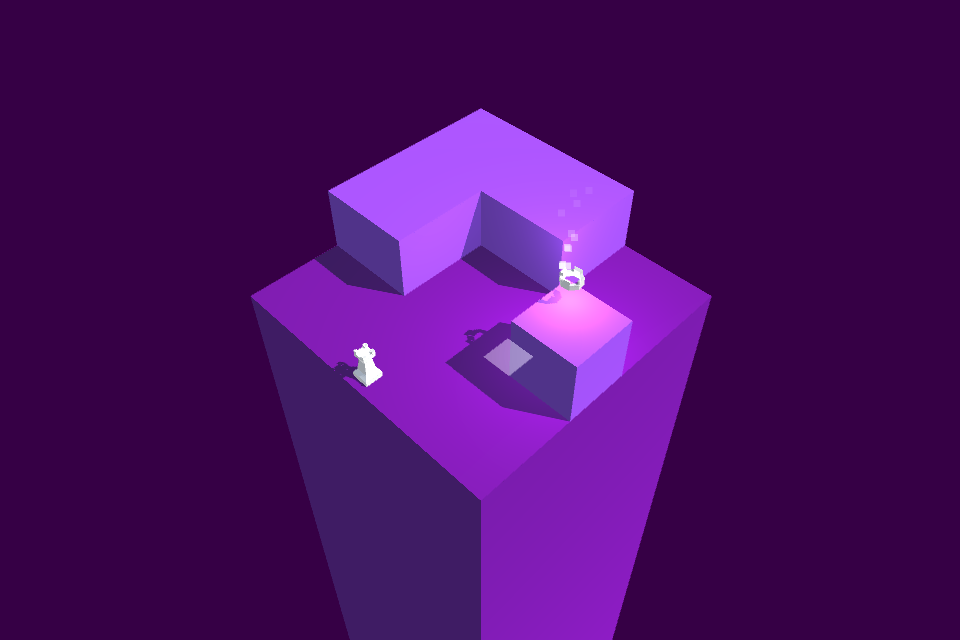
Rook is a small mobile puzzle game that I made before visiting EGX a few years ago. You move a rook chess piece around different levels, attempting to get to the crown. The column that the rook rests on can be rotated 90 degrees in either direction, and when you do this, any white components on the column remain fixed in space. This means that the player must find the correct combination of column rotations and rook positions that lead them to the crown.
The Alchemist
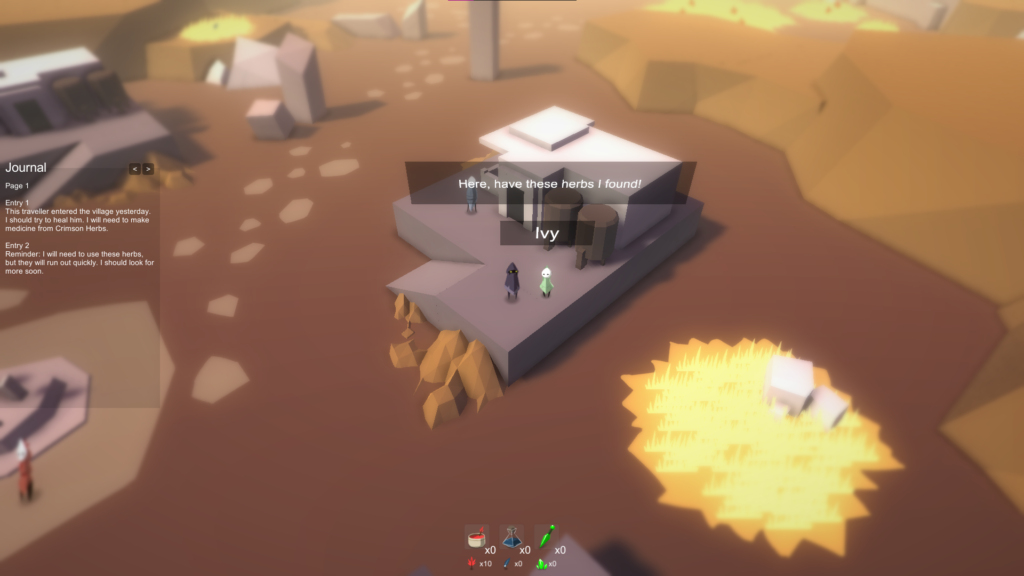
The Alchemist is the game I made for the Ludum Dare 33 game jam. It’s the most complex of the 3 games I’ve made for Ludum Dare, but as it’s the least polished, it has been pushed to the Small Projects section! I learned a lot during this hackathon about what kind of scope I can actually achieve in 48 hours!
The game is a mini-RPG that presents the player with tough moral decisions. You are an alchemist in a small hamlet who is trying to nurse a shunned traveller back to health by collecting potion ingredients. Over time, the inhabitants of the hamlet make it clear that you and the traveller are no longer wanted, but the world outside of this small civilisation is also dangerous. It’s up to the player to decide how they want to resolve this situation; the outcome is open-ended.
The Song of Aria
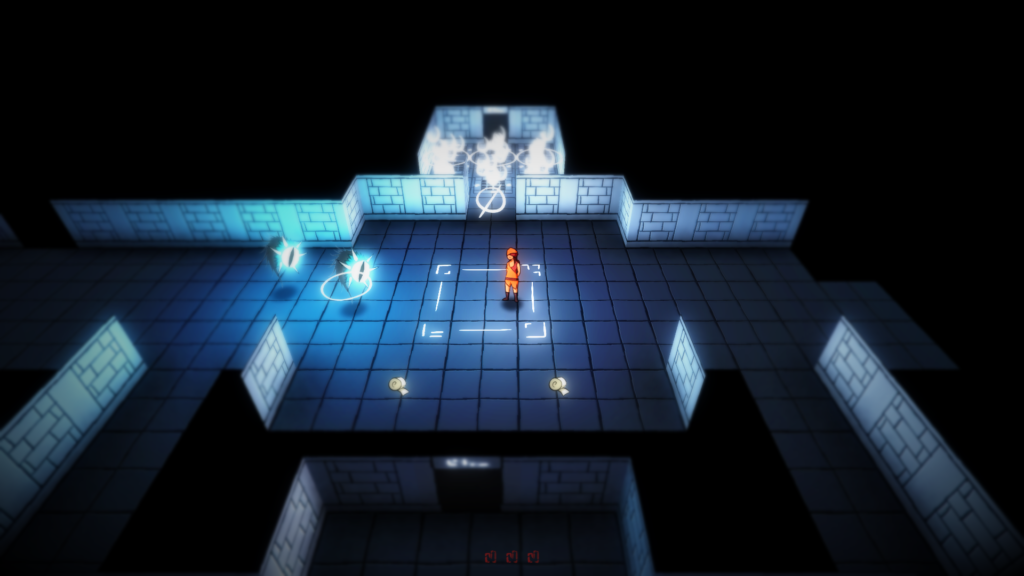
The Song of Aria is a game about a Songcrafter, a girl called Aria, who can craft magic with her voice. She is also blind and uses her singing to listen to echoes, allowing her to ‘see’ the world around her. Aria finds herself trapped in the ruins of an ancient power and must use her vocal talent as an ‘unconventional weapon’ against the dangers that she finds there.
The game was made for Ludum Dare 32, a competition to develop a full video game in 48 hours that meets the theme ‘An Unconventional Weapon’. All of the game’s content was created in those 2 days, except for a small collection of framework code.
The Song of Aria was well received by those rating the Ludum Dare entries, scoring in the top 50 out of over 1000 entered games.
Tumball
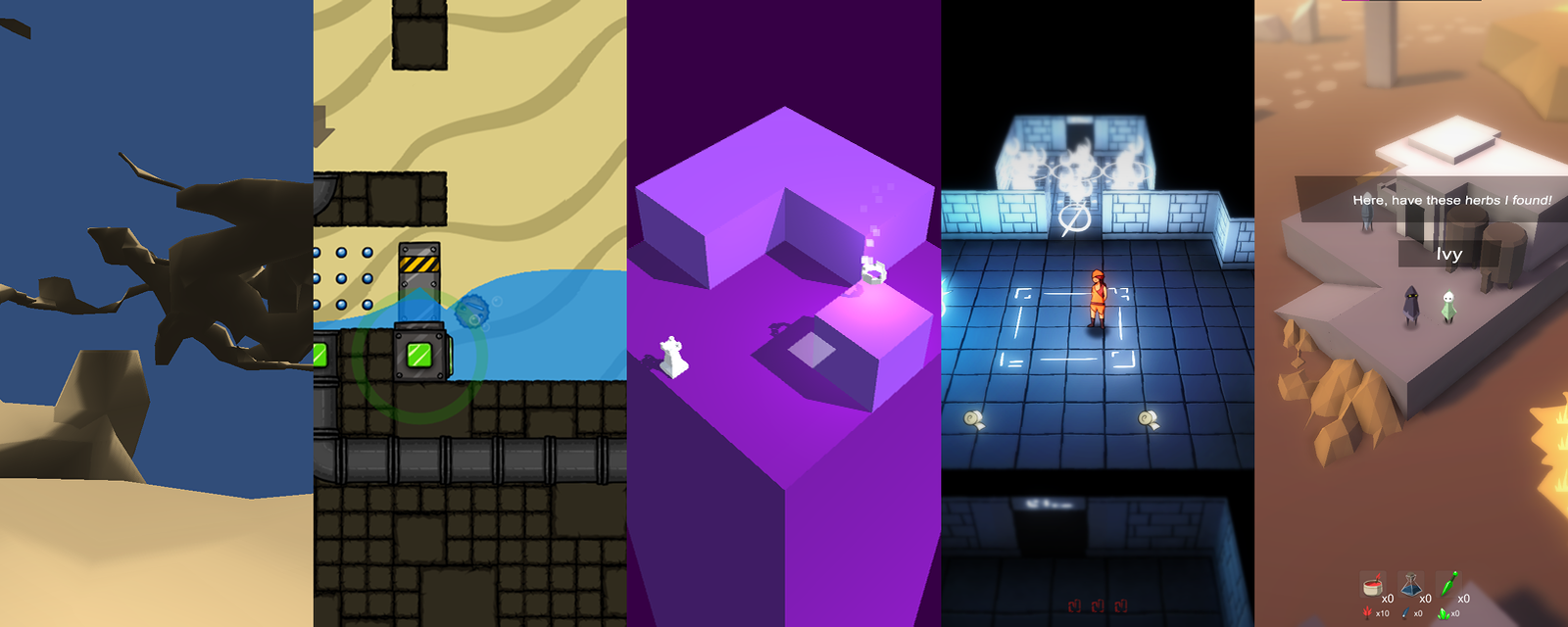
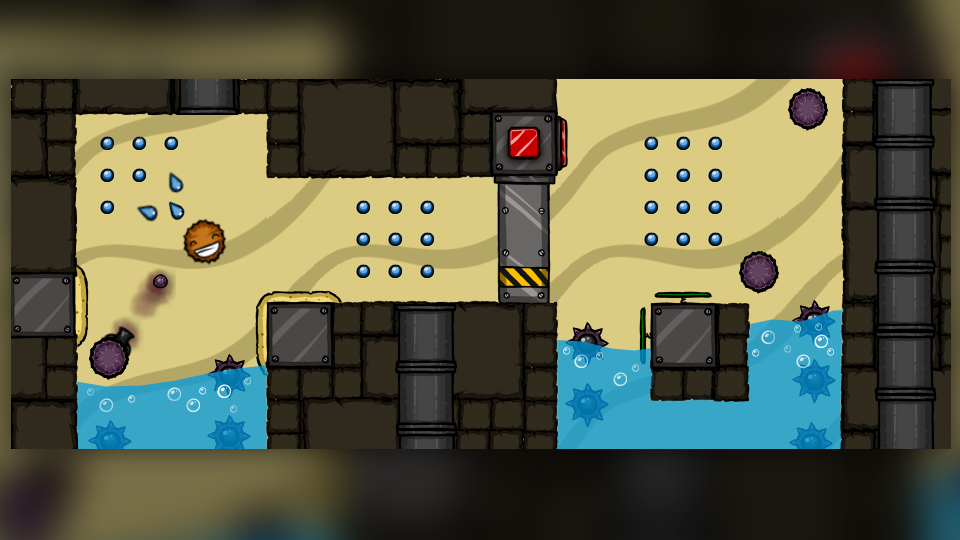
Tumball is a challenging arcade-puzzle-platformer with 30 levels over 3 stages. Each stage brings something new to the game. The first stage introduces the main mechanic: bouncing the main character, a ‘Tumball’, around the map by firing it from pipes or gradually redirecting it with the mouse. The second stage brings hazards into the game that the player has to carefully avoid. The last stage adds mechanisms and dynamic fluid physics to increase the puzzle complexity.
Tumball originally started life as a very different game, without a cute character and a bright, appealing colour scheme. After getting feedback from playtesters, I found that they felt the levels were boring and they had little emotional connection to the game, so I redesigned the entire graphical style. I added more colour, more personality, and a simple story to get the ball rolling (excuse the pun). A few months later, we got Tumball!
Voxel Engine
For my university final year project, I developed a voxel engine, researched methods of voxel visualisation and invented my own algorithm for detecting individual volumes in a field of voxels.
Voxel engines have become very familiar in recent years due to the popularity of the video game Minecraft. Voxels are the individual cubes that make up the world. These cubes can be simplified to a 3D field of values. Each point in this field must contain some useful data; in Minecraft, this is the material of the block placed at a position. For my voxel engine, I used density instead of material; a technique similar to this is often used in medical imaging software.